
The locking-in mechanisms

The Honeymoon is Over
Despite a paucity of evidence, I believe cooperation, reciprocal altruism, or some capacity for mutually beneficial social interactions got us through the bulk of human evolution. Many think these behaviors led to massive neurological advances, language, and the arts. Other interactions, including competition and violence between and among individuals and groups, existed, but none contributed as much to who we are today as cooperation. That cooperative habits persist suggests that individual- and group-level selection over the past 300,000 years favored cooperative traits. Positive interactions, gift economies, and sharing played significant roles in organizing social structure in the past 10,000 years as we grew in number and in spirit.
The emergence of resource wealth and social expansion created new opportunities to expand individual and group behaviors. However, our cooperative nature also made us prone to overgenerosity. Selfish, power-seeking individuals became more numerous and difficult to control. Some likely realized cooperation could be centralized by wrestling power away from the group. Whereas many of us wanted to enjoy the emerging comfort, joy, and peace, and to develop language, music, and art, others saw opportunity. Comfort could also have meant that many of us let down our guard due to complacency and even boredom. Human groups that previously coexisted in more harmonious, even quasi-egalitarian, balance may have fallen victim to emerging personality types that took control for themselves.
Combine cooperation, leisure time, and lootable surplus, and you create the potential for selfish power-hoarding that characterizes Modernity. While cultural regulatory mechanisms like shame and shunning worked in small groups, these tools did not scale with population growth. Moreover, hypervigilance and confidence in others’ behaving appropriately may have backfired as ambitious people sought power. As the post-Pleistocene cultural explosion kicked off, we became increasingly vulnerable to sneaky behavior from individuals playing by their own emerging rules.
Cooperation is Exploited
The hypervigilance required to maintain a more egalitarian society is tiring. Having to be responsible for your neighbors’ behavior was probably exhausting. Our enjoyment of leisure time made us easy targets for manipulation by dark triad personality types. The newfound rulers applied institutional manipulation, making small changes over time accumulate to alter one’s perception of reality. Under hierarchical rule, individuals could relax more. Life could be even easier. Our nature made us malleable, and the suddenness of the takeover left little time to consider the consequences.
While cooperation is likely adaptive, it is also easily exploited. The true mastery of the more selfish personality types is in their exploitation of our cooperative nature. One couldn’t design a personality trait better than cooperation for being submissive in a power hierarchy. The combination of selfishness and cooperation – Shakespearean in its tragic irony – is what made our modern world possible. Selfish, Machiavellian, and narcissistic personalities became favorable to lead quickly expanding villages. Cooperation rendered ‘regular people’ easily manageable minions, and all they needed were feedback tools to keep us in line.
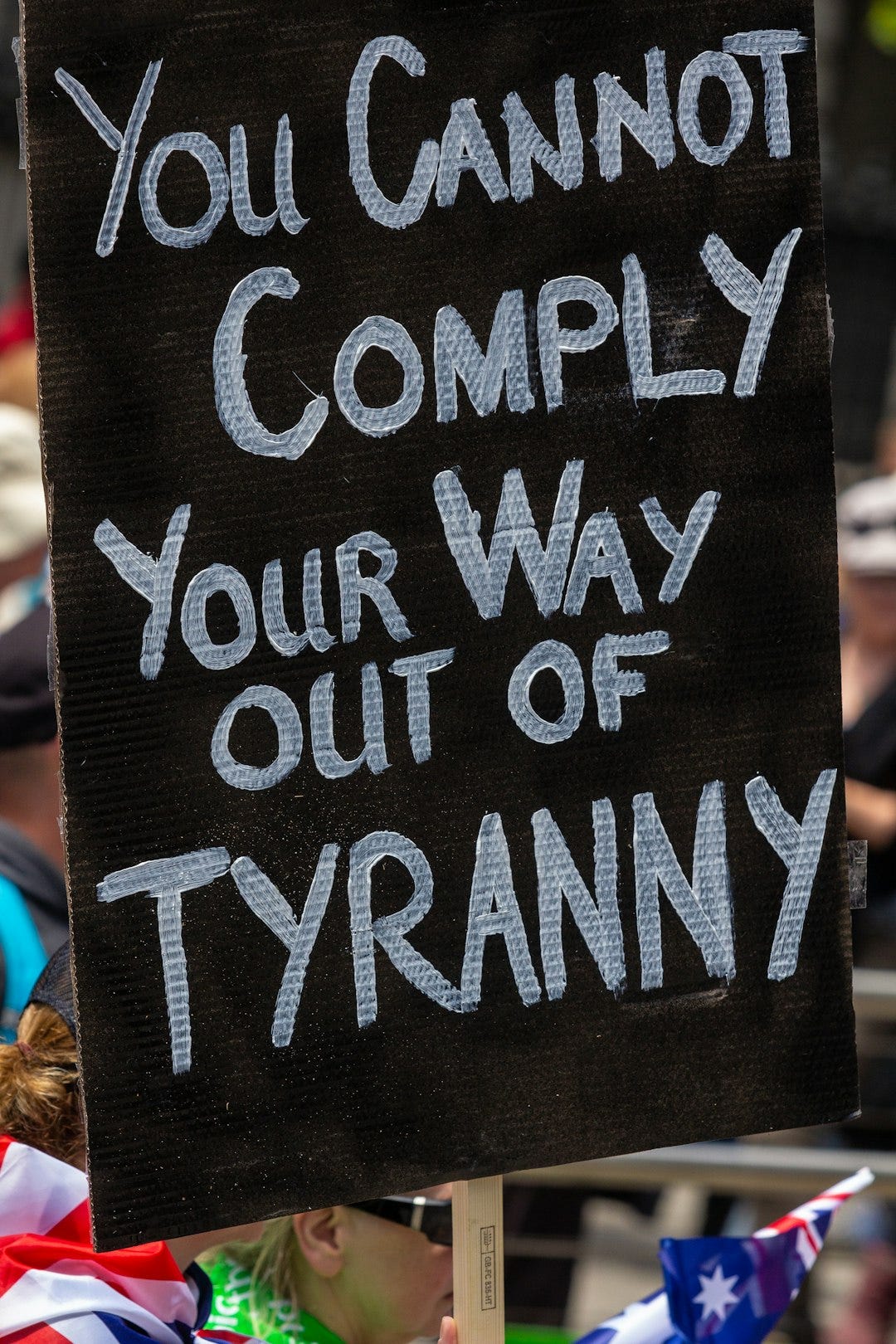
But what’s most amazing about this non-hostile takeover is that it became permanent. For over 5,000 years, some form of patriarchal hierarchy dominated civilization. Some say it is inevitable that, once power exists, it will be wielded by individuals or small groups motivated by power itself. Like a lock and key, selfish personality traits and associated values fit neatly into hierarchical systems designed to regulate the behavior of the many to benefit the few. And the charade that everyone benefits equally somehow prevails. Hierarchy became self-enforcing by converting cooperation into compliance, and that compliance to the benefit of rule.
Hierarchy Perpetuated
After the takeover, the new system stabilized by balancing punishment and obedience to maintain culture. Cooperation became acquiescence, likely due to our desire to maintain the status quo. Thus, power became its own regulatory mechanism. The early rulers didn’t create anything new; they simply exploited cooperation to unify a supportive base. Storytelling, our richest cultural tradition during the cold period that preceded the Holocene, evolved to enforce emerging hierarchical dynamics.
Storytelling mechanisms continued to evolve through Modernity, but blossomed between 10 and 5,000 years ago. Culture. Familial structure. Sexual behaviors and societal norms. Where shame and shunning worked for millennia, these new hierarchies needed scaled enforcement mechanisms. Threat of violence is a strong motivator to keep people in line. But more subtle regulatory systems were needed as insurance. Power is like that—leaders who have it will do anything to keep it.
The first stories used to solidify a social hierarchy focused on punishment for not following the rules. New guidelines included continued belonging, paying tribute and taxes to leadership, and behaving in ways that make for easier rule. Punishment would include harm to self or loved ones, excessive payment, and even death. Powerful gods promised consequences for disobedience, holy houses nurtured the status quo, and group membership was required for access to mates. Religion became central to social management, and stories evolved for behavioral control. Children were drafted upon birth or banished to the worst possible fate beyond death.
Children would eventually be managed by public education, ostensibly designed to promote social health. In truth, education is another mechanism to dictate behavior and assign punishment where appropriate. Humans are non-consensual until their second decade, so it was important to establish hierarchical rules early. The combination of religion and education serves this purpose wonderfully, even today.
Beyond academic and religious constraints, societal rule took the form of government, police, and the military. The threat of going to hell, being demoted to a lower social class, or being removed from the protection of family were effective, but more severe punishments were needed to ensure persistence. Financial limitations, violence, and death could be enforced at any time for any sort of resistance or disobedience as defined not only by spiritual doctrine, but by law.
Additionally, new and non-natural sexual selection forces were created, maintaining hierarchical levels and all but preventing breeding up the chain. Reproductive success was now a class decision rather than left to the individual. The capacity to rear children, protect the family, or pass on desirable genes, formerly the driving forces behind the sexual selection portion of evolution, became secondary, at best, to marrying into whatever the religious and familial constraints allowed.
Dark triad leadership closely monitored high-level relations, and their enemies even more so. Bullies and power kept their eyes on one another and were associated by their position. All the others were rendered non-threatening and kept in their positions by sophisticated systems designed to perpetuate the haves and have-nots, us versus them, and lopsided imbalance resulting from the loss of homeostasis at the resource level. In a few short generations, movement between class levels was minimized, thus solidifying leadership through time.
Why it Worked
Concentrated power to top-down regulate society was probably very effective at keeping lower classes in position. Surely individuals suffered from the loss of agency, balance, and mate selection, and no one wanted to be in the lower class. We survived by either being in a position of power or by cooperating with leadership, even if that meant sacrificing individual agency. Remaining in place became the goal of higher-ups, but moving up from lower tiers was nearly impossible. As both sides struggled to maintain position, hierarchical power systems became adaptive for everyone.
Not obeying the rules meant lower status, reduced reproductive success, and minimal genetic representation in future generations. Conversely, kinship at high levels greatly increased the likelihood of passing on power-hungry genes to the next generation. Hierarchy was initially enforced at these levels: haves and have-nots. The have-nots populated all of the lower, obedient levels, which were comprised of individuals seeking to reach a higher level and ultimately become the haves.
The haves versus have-nots bifurcation is critical. Those in power, the haves, made, enforced, and updated the rules to suit their needs. Everyone else obeyed in hopes they would one day be invited into the fold. This further enforced the hierarchy by maintaining the dynamic. Power governed all, and although the lack of power was less comfortable, it was both unavoidable and necessary. The haves maintained themselves through nepotistic-like reinforcement whereby only those born into, or highly selected into, the upper class could enter. Power begat power, and all others remained imprisoned in the serving classes. Sound familiar?
The power hierarchy was unprecedented and became the status quo, leading to Egypt and other modern civilizations. Though adaptive, the force itself was non-natural. Slavery became a necessary component of human life, whereas more equivalent or egalitarian structures are thought to have dominated for the preceding 97% of human existence. The non-natural selective forces thought to have been induced by dark triad personality types 10,000 years ago now seem irreversible. Though outright slavery has been abolished in the US, working-class people struggle to maintain their societal position, avoid debt, and become wealthy. Worldwide, you are born to wealth and power, or rarely find either. Instead of being welcomed into an accommodating world, most of us are doomed from the start.
Power Hierarchies Can Be Reversed
For the first time in Earth’s history, humans started influencing evolution. Unprecedented resource surplus coupled with massive neurological and sociological growth made system modification possible. Self-interested people created and perpetuated selection forces to maintain top-down power dynamics. Human social structure was completely transformed. Nonnatural selection led to new social structures characterized by few beneficiaries and many servants. The benefits were privatized, and losses socialized. Accelerated growth outpaced our ability to understand or plan for what was happening. Before we knew it, the hierarchy was here to stay.
Fortunately, just because the system exists does not mean it is permanent. Humans induced the changes, and we can reverse them – or at least implement new changes. The shift from more balanced decision-making and societal structure toward selfish top-down control is not irreversible. But broad acceptance of this truth is essential for progress, as non-natural elements have no place in natural systems. Our relationship to each other and our ecology needs assessment and understanding. A return to homeostatic balance must occur for living systems to persist. But make no mistake, to get ourselves out of the power hierarchy means a reversal of all that our generations – and all of recorded history – comprehend.
To solve the modern human dilemma, we must understand and appreciate who we used to be. Only by identifying the decisions made, beliefs designed and accepted, and natural laws broken can we make new choices. To choose a new fate, we must fully examine who we are now, who we used to be, and connect the historic dots toward who we want to become.
This is part 5 of a 6-part series.
Part 1: Yet Somehow We Got Egypt
Part 2: We Have it All Wrong
Part 3: Who We Used to Be
Part 4: The First Artificial Selection
Discover more from The 10,000 Year Problem
Subscribe to get the latest posts sent to your email.