
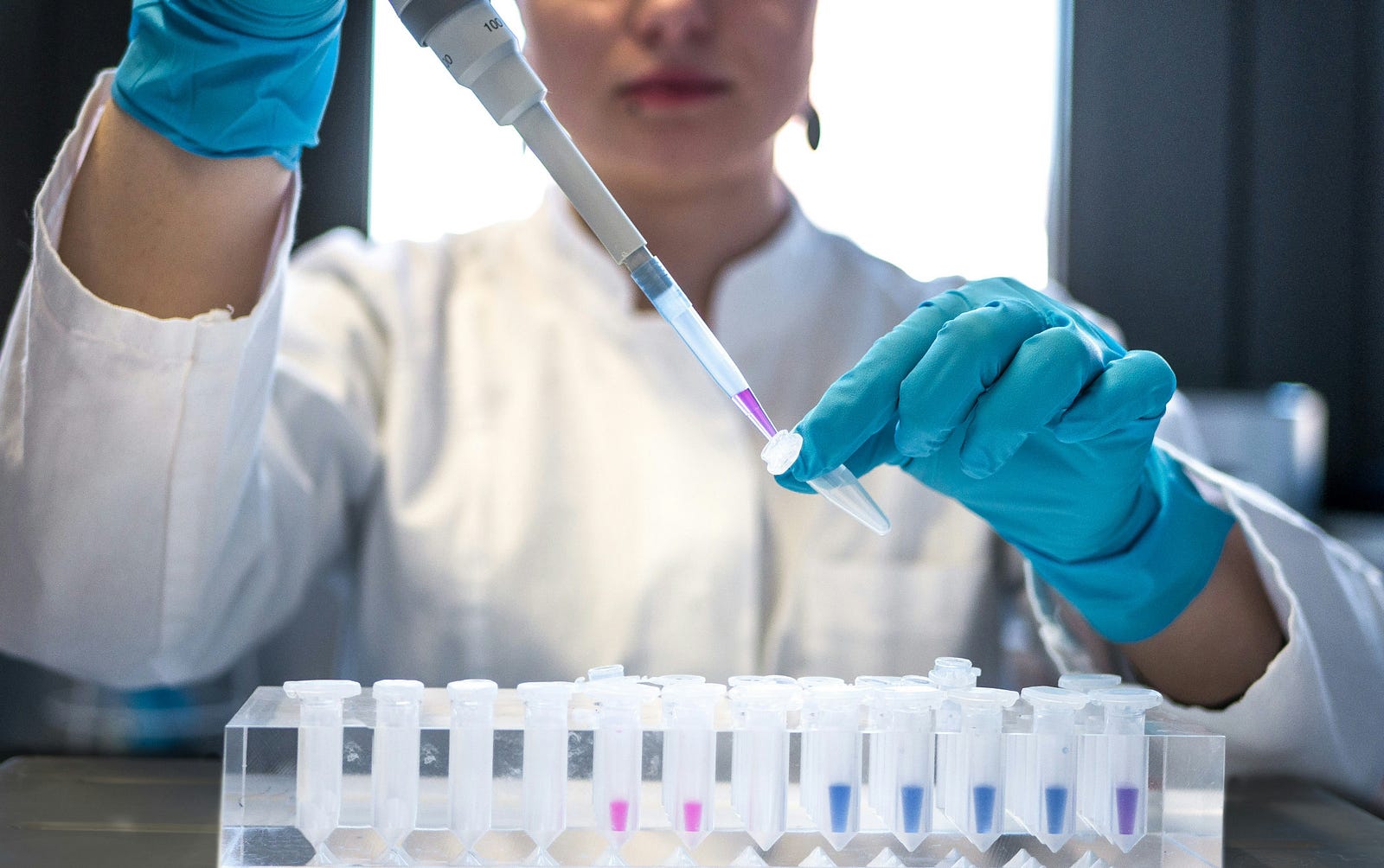
And most of us aren’t even scientists. But we think we are.

have a B.S., an M.S., and a PhD. Depending on your position in the ‘street vs book smarts’ debate, I may or may not be smart.
Personally, I think degrees are overrated. I also think I’m smart. But my intellect has little to do with my degrees. Correlation, not causation.
I see my intellect as more of a crutch than a benefit. Supposedly, I’m overqualified for most jobs outside academia. And I quit academia. So, it’s complicated.
Science and Bias
Smart or not, I consider(ed) myself to be a pretty good scientist. I measure this by the way I look at bias. I am extremely aware of my bias. More so of other people’s biases, but I try to think about my own. Science (supposedly) tries to minimize bias, but does a terrible job at it. That’s part of the reason we are bad scientists. We have too much bias.
Turns out, there are a lot of reasons we’re bad scientists. We’re also bad scientists because we follow our interests. No one studies things they aren’t interested in. And, if they do, it is because they are getting paid a crap ton to do it. Either way, there is bias in the motivation.
The smartest person I ever met said something that opened my eyes to invisible bias. In a laboratory full of biologists studying various organisms of interest, she proclaimed that if we really wanted to know the answers to the questions we were asking, we should be studying nematodes. Nematodes are ubiquitous and occupy every possible niche. Their communities and populations are rich. They reproduce quickly, and most forms of sampling would not harm them
But no one gives a shit about nematodes. We were more interested in charismatic megafauna, or animals people wanted to hunt. You know, because those animals receive funding to study them because they have economic value.
But I’m not biased.
Most People Aren’t Scientists
Nowadays, everyone thinks they’re experts on everything. Whatever the issue is, we all have opinions. And it seems that we value these opinions as highly as anyone else’s. From self-diagnosing ourselves from internet chatter to understanding climate change isn’t caused by humans, we all think we know everything.
I don’t know (or care) how this came to be, but the evidence is everywhere. We’re all experts to the point that the actual experts have been devalued.
And it’s not unfair. Most of the scientists I knew when I was in academia were grotesquely biased. Worse, the thought they weren’t. In the same way we all think we’re experts about everything, scientists think they’re unbiased. Why would anyone intentionally do something they knew was wrong?
We All Think We’re Right
Think about it. Why else would we do the things we do? Few people, if any, would go through the world behaving in ways they knew to be wrong. It would drive a person nuts to do so. We all think we’re right.
And we can’t all be right. Subjective truth isn’t truth. It’s something more akin to opinion. Truth is an absolute. And, for the record, I don’t think humans have the capacity to know absolute truth. Even if we are all walking around speaking about subjective truths, we can’t all be correct.
At any given time, we are more or less right or more or less wrong. And it’s hard to know which, or how much. The best we can do is keep an open mind, and remember that there’s a good chance we’re wrong about whatever it is we so strongly believe we’re right about.
I’m a Bad Scientist
I owe this to my wonderful therapist. He pointed out to me that, for someone who is so highly trained as a scientist, I pretty much suck at it. My trauma expresses itself as self-loathing, and I find evidence of my suckage in nearly anything I do. Similarly, I will ignore any evidence suggesting I might not suck.
I move through the world testing the hypothesis that I am not good enough vs. the null hypothesis that I am actually ok. But I only see the evidence I want to see. I’m not a good scientist.
Notice I use the word ‘evidence’ and not ‘proof’. Like truth, proof is another condition that is rarely met. Science hardly ever proves anything. Humans do that by reaching consensus around evidence. But I digress. . . .
So, I’m the world’s suckiest scientist when it comes to assessing my mental health. No matter what I do, I find an error in it. I look for any morsel of evidence that will support the hypothesis that I’m a piece of crap. And, man, I can find it ANYWHERE.
Worse, when something does happen, when I receive praise or accolades, I IMMEDIATELY dismiss it as an error. I blow off the positive evidence, convinced that it is poor data. Surely, someone mismeasured, didn’t understand, or made a mistake.
Isn’t that some bad science?!
A Universal Problem
The thing is, we’re all bad scientists. Many of us, like me, beat ourselves up over every little thing, seemingly unable to find the good in what we do. Codependency, people-pleasing, and conflict avoidance are examples and symptoms of this particular form of inadequate science.
Even regular scientists are crappy. I never met an ecologist (my field of study) who wasn’t an environmentalist, at least to some degree. It is a common critique of climate change that the researchers want to find human causes in their data. And it isn’t untrue. I don’t think it always means the science is bad, but it is something that happens. And when the scientists deny it, it makes them seem less credible. As my friend said about nematodes, most scientists have a bias in favor of what they study and what they think is happening.
Even our most basic beliefs are essentially biases. We think we follow certain religions or certain sports teams because we like them. This implies we did some sort of investigation comparing all of our options and made a choice from the data. In truth, most of us like what we like because we learned from our families, churches, schools, and teams. We are biased that we are the masters of our own domains.
In truth, influence is all around us, and it is mostly invisible. But we can learn to be aware.
Why Not Embrace Our Biases?
What is it about bias that we are ashamed of? Can’t we admit that we have bias and move forward? Take my example. I can admit that my self-loathing is perpetuated by my inability to celebrate my victories or see my actions as anything but negative. I KNOW my bad science exacerbates my suffering, and I am working on getting better. Isn’t that more productive than pretending I’m not biased?
To embrace our biases, we first have to find them. We have to open our minds to being wrong. We have to admit that we may not be experts at everything. We must let go of our identity as effective scientists and accept that we aren’t.
But of course we’re not. Again, even those trained in science carry forward the biases of their teachers, mentors, and their field. Bias is everywhere. Thinking it isn’t is a form of bias in itself.
And IT’S OK. As long as you are aware that bias is rampant and that you are affected by it in unseen ways.
The First Step is Admitting You Have a Problem
As with most things, I think awareness is the solution. Once you open your mind to the idea that you can be wrong — and that it’s ok to be wrong — the rest sort of takes care of itself. If you can be wrong, anyone can be wrong. And most people are likely wrong at any given time, given that we all think we are right.
If you can make some room for being wrong, your mind opens to so many things. And, yes, some of these things are frustrating and mind-numbing, like the argument about absolute vs. subjective truth, but you also have to learn not to attach to ideas just because they come up.
What is important is letting go of being attached to your identity as someone who knows everything. You don’t. It’s impossible. If you could let go of your need to be right, you would see how obvious this is.
And if you’re someone like me, admitting you suck at hypothesizing about your own self-worth just might help you be more self-compassionate. And that would be an incredibly meaningful result.
Of course, I’m biased.
Discover more from Revolutionizing human evolution
Subscribe to get the latest posts sent to your email.