
Why cooperation > competition in diverse ecosystems

Photo by Hiroko Yoshii on Unsplash
How did patriarchy evolve in the social structure of a primarily cooperative species? I began asking myself questions like this after a couple of archaeological experiences in England and Egypt. I realized we must understand — as well as possible — what happened to humans since the last glacial period that led to the modern societal structures we have today.
The Collective vs. the Individual
A central tenet of my argument is the question of cooperation vs. competition. Both forces shaped societal structure, but modern civilization suggests that competition is more evolutionarily beneficial. Patriarchy, fascism, democracy, and arguably most modern societal governance include a small number of leaders and large numbers of citizens. I argue that this is a deviation from a baseline of cooperation.
Because we don’t know much about civilizations older than 5,000 years, it is speculative to answer the competition vs cooperation question. However, we can look to natural selection as an objective window into our past.
Examples in Nature
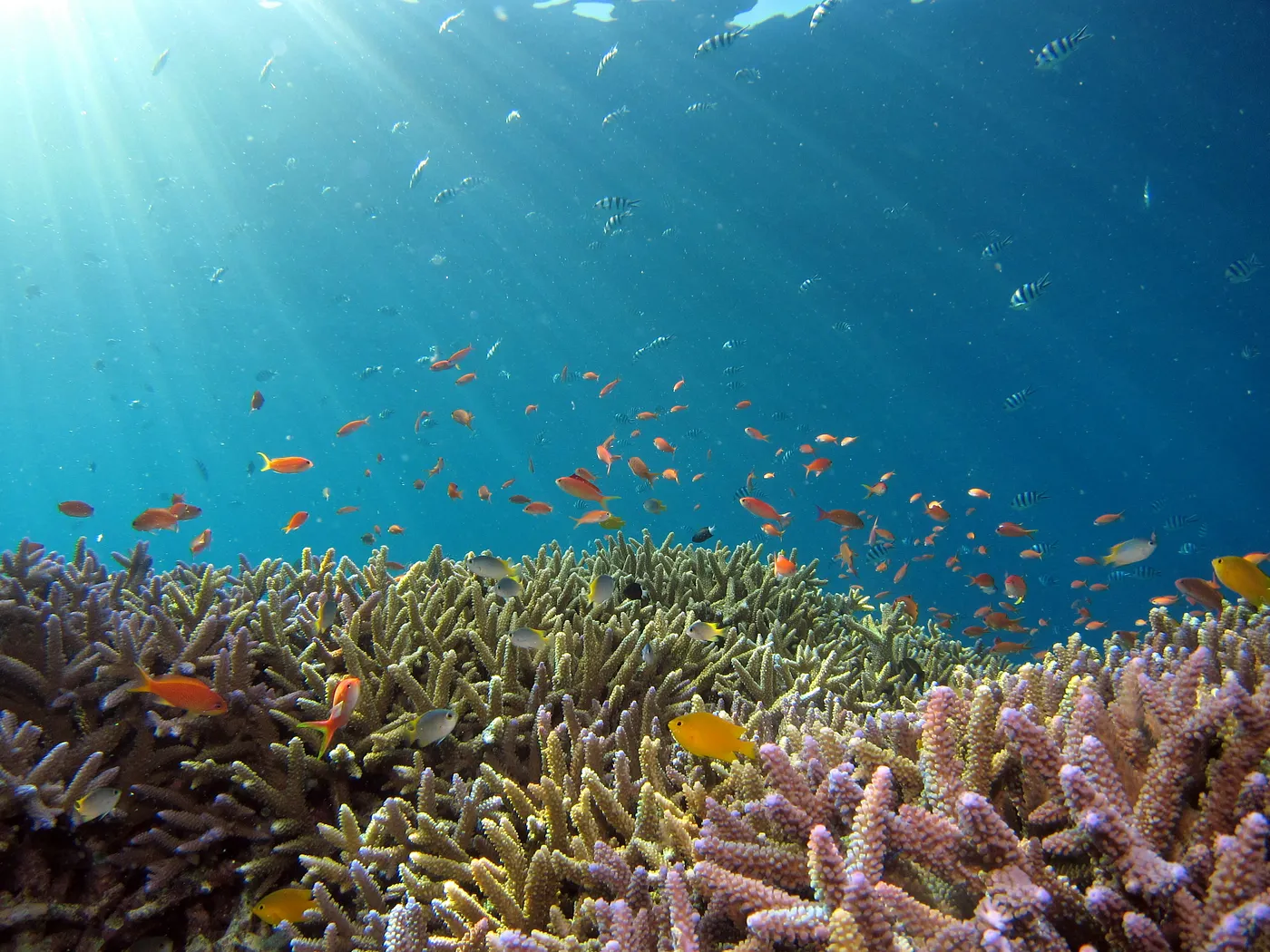
Consider the coral reef, characterized by high diversity and efficient resource use. Competition exists on small scales within and among a few species, but cooperation forms the literal foundation of life. Further, this diversity — among the highest for all ecosystems on Earth — exists in a nutrient desert.
Competition, in ecological terms, only exists when resources are scarce. If resources are plentiful, there are enough to share. If food, shelter, and mates are not hard to get, competition doesn’t exist. It is only when one or more of these critical elements become scarce that individuals must compete for them.
Why, then, in one of the most nutrient-limited places on Earth — reefs occur in literal deserts, which is part of the reason the water is often so clear — do we have such high diversity? Cooperation.
One can argue that reefs are the exception, but things are not much different in tropical rainforests, where diversity is high, but nutrient availability is extremely low. In both ecosystems, cooperation among individuals to capture and circulate limited resources fuels diversity.
Cooperation as a Foundational Asset
Specialization among individuals, whether in fixing nitrogen or carbon, creates a foundation for other life to exist. This is made possible by a mutually positive relationship between algae and coral. Algae fix carbon via photosynthesis, and coral provide a protective foundation. Together, they create a literal foundation for other organisms to feed, hide, and spawn.
Without cooperation, competition can’t exist in these complex ecosystems. Sure, in well-established systems like coral reefs, individuals may evolve to compete for mates, reproductive space, and food, but that is a tertiary branch of the ecosystem network, not the foundation. Competition, then, is a higher-order strategy built upon a more rudimentary, and thus more critical, lifestyle.
Nature-Informed Society
Until we understand how modern societies formed, we will continue to make the same mistakes from the past. Valuing competition, arrogance, and power in social design prevents us from the kind of evolution found in coral reefs and rainforests.
One way to effect this kind of change is to promote leadership from individuals outside the dark triad personality types. I always say, if you want to be a politician, you should be excluded from the pool. Electing our leaders should be a civic responsibility like voting. The more reluctant a person is to serve, the more their personality type might be suited for the job.
One thing is for certain: social groups weren’t always led by overly competitive and even pathological personality types. How would things be different if we were led by more sensible people? Is it possible to reduce the wealth and power associated with leadership? Can humans (re)learn to value cooperation, empathy, and connection over competition, strength, and individuality?
Discover more from The 10,000 Year Problem
Subscribe to get the latest posts sent to your email.